
Wednesday, May 21, 2025
The Cosmic Spectacle: The Fascinating Life (and Death) of Stars
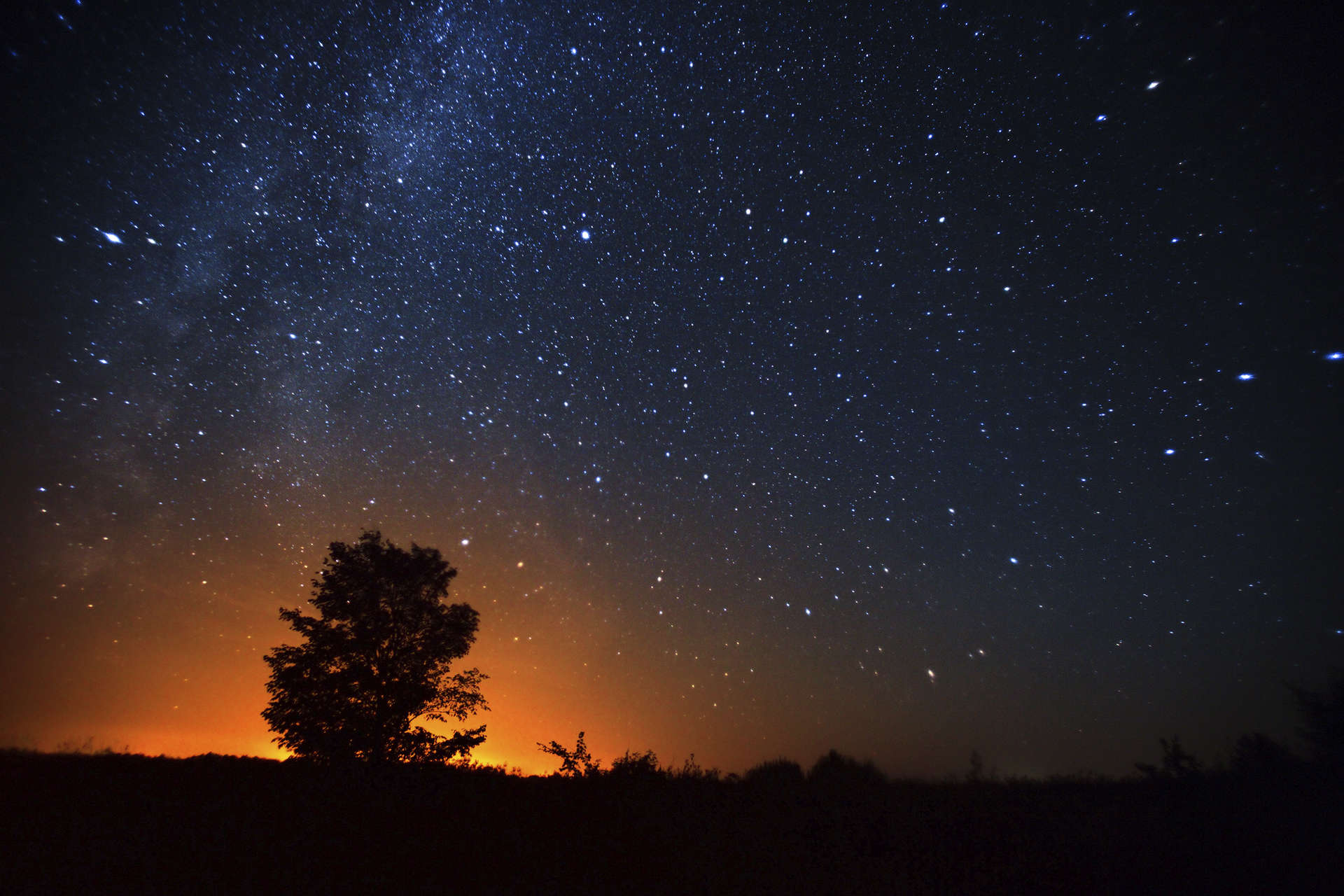
Look up at the night sky and you'll see billions of them: twinkling points of light that seem eternal. But these are stars, and behind their apparent stillness lies a cycle of life and death as dramatic and complex as any living thing on Earth. Stars are the fundamental building blocks of the universe, responsible for creating the elements that make us up and for illuminating entire galaxies.
Have you ever wondered where these celestial giants come from and where they go? Get ready for a cosmic journey, because we're about to unravel the mysteries of stellar birth and death!
The Birth of a Star: From Chaos to Light
The process of star formation is a true cosmic ballet that begins in vast, cold clouds of gas and dust, known as nebulae.
-
Gravitational Collapse: Within a nebula, small disturbances (like shockwaves from nearby supernovae or the simple gravitational attraction between particles) cause some regions to become slightly denser. In these regions, gravity begins to pull gas and dust inward, causing the cloud to contract.
-
Protostar Formation: As the cloud collapses, it spins faster and flattens, forming a protoplanetary disk (where planets may later form) and a dense, hot core at the center, called a protostar. The temperature and pressure at the protostar's core increase dramatically.
-
Nuclear Ignition: The true birth of a star occurs when the temperature in the protostar's core reaches about 10 million degrees Celsius. At this critical point, the pressure and temperature are so intense that hydrogen atoms begin to fuse together to form helium. This process, called nuclear fusion, releases an enormous amount of energy, which is what makes the star shine.
-
Main Sequence Star: Once nuclear fusion ignites and stabilizes, the star enters its longest and most stable phase, known as the Main Sequence. Our Sun, for example, is currently in this phase. For billions of years, it burns hydrogen in its core, maintaining a balance between outward pressure (from fusion) and inward pressure (from gravity).
The Death of a Star: Different Fates, Grand Spectacles
The ultimate fate of a star depends massively on its initial mass. Larger stars live shorter, more spectacular lives, while smaller ones linger for trillions of years.
1. Small and Medium-Mass Stars (like our Sun)
When a star like the Sun runs out of hydrogen in its core, it begins to die gradually:
- Red Giant: The star's core contracts and heats up, but the hydrogen in the outer layers begins to burn, causing the star to expand dramatically and cool, becoming a red giant. It can engulf nearby planets (goodbye, Mercury and Venus!).
- Planetary Nebula: After the red giant phase, the star's outer layers are expelled into space, forming a beautiful and colorful cloud of gas and dust known as a planetary nebula. The term "planetary" is an unfortunate historical misnomer, as it has no relation to planets, only to the spherical shape some of them take.
- White Dwarf: What remains at the center is a hot, dense core, about the size of Earth but with the mass of a star. This is what we call a white dwarf. It no longer performs nuclear fusion but shines faintly due to residual heat. Eventually, after trillions of years, a white dwarf will cool completely and become a black dwarf – a cold, dark object.
2. Large-Mass Stars
Stars with much greater masses than the Sun have a far more violent and dramatic end:
- Red Supergiant: They also expand to become red supergiants, but on a much grander scale. In their core, they continue to fuse heavier and heavier elements (helium into carbon, carbon into oxygen, and so on) until they reach iron.
- Supernova: Iron cannot be fused to release energy, and when the iron core builds up, the star can no longer support its own gravity. The core collapses in milliseconds, generating a shockwave that explodes the star's outer layers in a cataclysmic blast known as a supernova. This event is so bright it can outshine entire galaxies for a time!
- Neutron Star or Black Hole: What remains after a supernova depends on the mass of the remnant core:
- Neutron Star: If the core is between 1.4 and 3 solar masses, it will collapse into a neutron star, an incredibly dense object where protons and electrons are crushed to form neutrons. A teaspoon of neutron star matter would weigh billions of tons!
- Black Hole: If the core is even more massive (generally above 3 solar masses), nothing can stop the gravitational collapse. It contracts infinitely, creating a black hole, a region of spacetime where gravity is so intense that not even light can escape.
The Essence of Stellar Existence
The cycle of star life and death is fundamental to the universe. Nuclear fusion within them creates the heavier elements – from the carbon and oxygen that make up our bodies, to the iron in our blood and the gold in our jewelry. When a massive star dies in a supernova, it not only marks a cosmic spectacle but also seeds space with these newly forged elements, which will one day condense to form new stars, planets, and, who knows, even life.
The next time you look up at the night sky, remember: each point of light has a story, a glorious birth and an inevitable end, but in their journey, they pave the way for the existence of everything we know. We are, literally, stardust.
